Stacked Signals: Decoding the Silent Chip Language of Australia's High-Stakes Tables
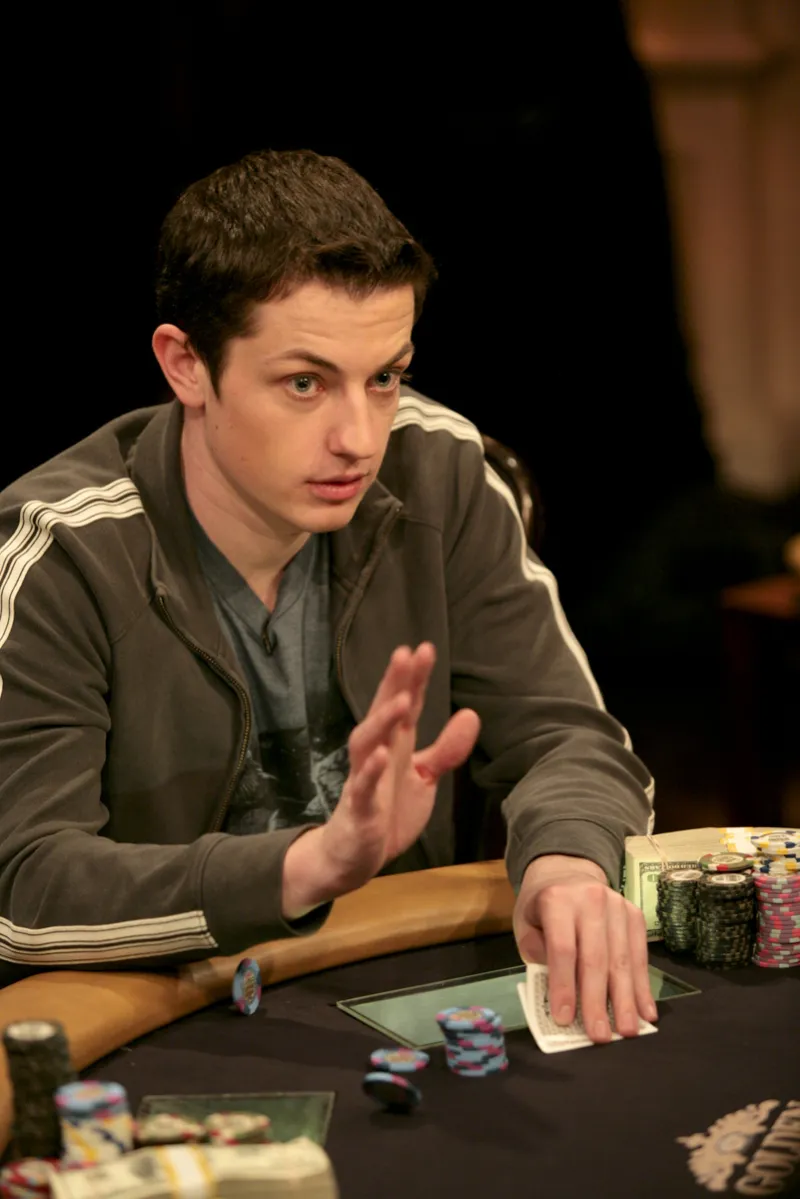
Photo: Casino Connection, CC BY 2.0, via Wikimedia Commons
Walk into a high-limit room at one of Australia's bigger casinos and the first thing you notice is the noise. The second thing you notice is the chips. Not the money they represent — the way they sit, move and announce themselves. To a casual punter, a stack of chips is just a stack of chips. To a high-roller, it is a sentence.
At the extreme end of the market, where buy-ins can look like house deposits and a single hand can swing a year's worth of decisions, information is the real currency. Cards are only part of it. The other part is the silent language being spoken across the felt every few seconds.
The table has a grammar
Chip language is not a secret code with a rulebook. It is closer to body language: loose, context-dependent and easy to misread. Still, experienced players read it the way a mechanic listens to an engine.
Colour and denomination are the nouns. Stack height and arrangement are the verbs. Handling habits are the tone of voice. A player who builds perfect columns is saying something different from a player who lets chips sprawl across the rail like loose change. Neither is necessarily stronger. But the difference matters.
In Australian high-stakes rooms, the grammar shifts with the house. Some rooms favour large-denomination plaques, others rely on colour-coded chips that can be hard to read from across the table. Regulars learn the local dialect quickly. Visitors often do not.
Height, width and the quiet brag
A stack of ten chips is not simply ten times a stack of one. It is a public statement about intent. Tall towers draw the eye and can project force: I am here, I am funded, and I am not shrinking. Short, wide stacks can suggest the opposite — a player who wants to look conservative while still holding weight.
Then there is the capped stack: high-value chips placed underneath lower-denomination chips, deliberately obscuring the true size of the arsenal. It is not cheating. It is theatre. The player wants the table to underestimate them, or wants to avoid the kind of attention that comes with a visible mountain of cash.
Stack height also changes how a player bets. Someone who cuts a neat stack into precise amounts is signalling control. Someone who pushes a messy pile forward is signalling chaos, speed or aggression — or simply trying to unsettle the dealer's rhythm. In extreme environments, even a small delay can be a tactic.
The tell is in the fingers
Most chip tells are tactile. The riffle. The shuffle. The slow spin of a single chip between thumb and forefinger. The nervous tap against the rail. These are not always conscious signals. Often they are self-soothing. But high-rollers watch them anyway, because a change in rhythm can be more revealing than the gesture itself.
A player who has been riffling steadily for an hour and suddenly stops is worth watching. A player who starts handling chips faster after a big pot may be excited, anxious or preparing to leave. A player who stacks and restacks the same chips while waiting for a decision may be buying time — or trying to look casual while thinking hard.
The mistake is to treat any single tell as proof. Chip language is a supplement, not a substitute for cards, maths and table flow. The best readers collect small signals and weigh them against everything else.
Denominations as public accounting
How a player buys in is another paragraph. Someone who asks for a precise mix of denominations is announcing that they have a plan. Someone who slides a thick bundle across without counting is announcing that they do not want to be seen counting. Both can be genuine. Both can be performance.
Watch how players colour up. Watch when they call for change. A request for smaller chips can slow the game and create a moment to observe the table. A request for larger chips can be a flex. The way a player racks their chips after a win — quickly, slowly, protectively — says plenty about how much the money matters to them in that moment.
At Extreme Casino AU, we cover the loud end of the market: the big swings, the extreme sessions and the personalities who live for them. But the quiet layer is often more interesting. The chip language is where the table's ego, fear and calculation leak out.
Reading the room without staring
The skill is peripheral. Staring at another player's stack is amateur behaviour and usually invites a response. Experienced readers use reflections, dealer movements and the natural arc of the game. They watch the betting rhythm rather than the person. They notice when a stack changes shape, not when it simply exists.
In 2026, with so much high-stakes action moving between physical rooms and digital platforms, the chip language of a live table feels almost old-fashioned. That is exactly why it still works. It is physical, immediate and hard to fake for an entire session.
The next time you sit at a high-stakes table, look past the cards for a moment. The chips are talking. The only question is whether you are fluent enough to hear them.