Nobody Wins at 3am: The Case Against Australia's Overnight High-Stakes Tables
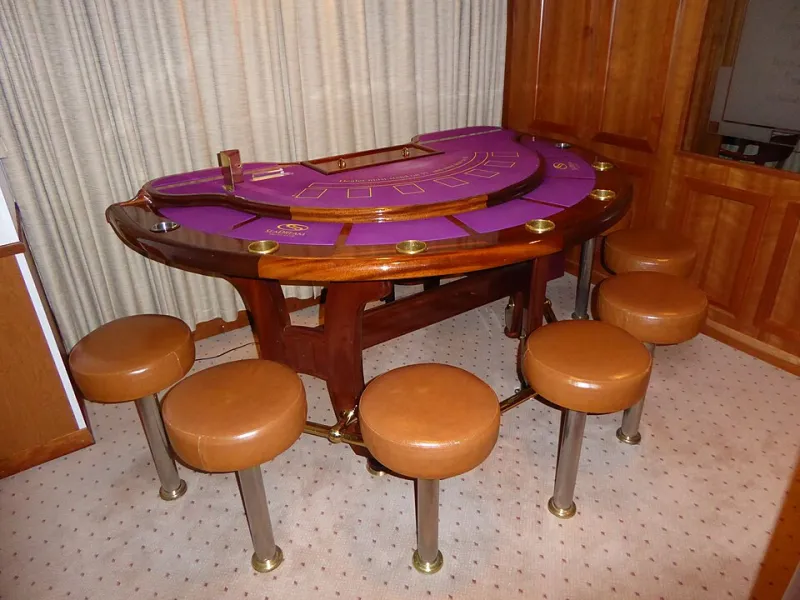
Photo: User:Mattes, CC BY 2.0 de, via Wikimedia Commons
Here's an open secret that everyone in the Australian casino industry already knows: the most dangerous hours at any gaming table are between midnight and dawn. Pit staff have a name for it — the vulnerability window — and if you ask them off the record, most will tell you the same thing. The overnight floor is where fortunes die.
What Your Body Clock Does to Your Money
The research on circadian risk-taking is unambiguous. Decision-making degrades sharply in the early morning hours. The brain's prefrontal cortex — the region handling impulse control and long-term thinking — effectively runs on reduced power after midnight, while the more primitive reward-seeking circuitry keeps humming along. Studies on shift workers, drivers and traders all point the same direction: people take bigger, dumber risks when they should be asleep.
Now put that tired, reward-hungry brain in front of a high-limit table with no natural light, no clocks and free drinks. That's not a casino. That's an experiment.
Why the Overnight Floor Exists at All
Defenders will point out that international VIPs operate on different time zones, and there's some truth to that. A punter from Southeast Asia playing at 2am Melbourne time might be wide awake at home. Fair enough. But the majority of overnight players in Australian casinos are locals, and locals at 3am are locals who have been awake for twenty hours.
The uncomfortable question is whether the overnight high-stakes room exists to serve players at all — or whether it exists because tired players lose more.
The Duty of Care Nobody Wants to Talk About
Australian casinos are required to have responsible gambling measures, and to their credit, some have improved. But the overnight floor remains a blind spot. There's no equivalent of a fatigue check. A player who has been on the floor for fourteen hours is treated the same as one who just walked in.
It doesn't have to be this way. Simple measures — session-time prompts that actually work, staff empowered to intervene on obvious fatigue, a genuine cooling-off period for marathon players — would cost the industry a fraction of its overnight revenue. That's precisely why it hasn't happened voluntarily.
My Position, Plainly
I'm not arguing for banning overnight play. Adults can make their own choices, and some night owls genuinely function better at 2am than 2pm. What I'm arguing is that the current setup is engineered — knowingly or not — to harvest the worst decisions of the most exhausted players, at the highest stakes in the building.
If a sportsbook offered 'tired odds' to fatigued punters, we'd call it predatory. The overnight high-limit room is the same thing wearing a nicer suit.
The sun comes up either way. The question is whether Australia's casinos are willing to be open during the hours when their customers are actually capable of choosing to be there.