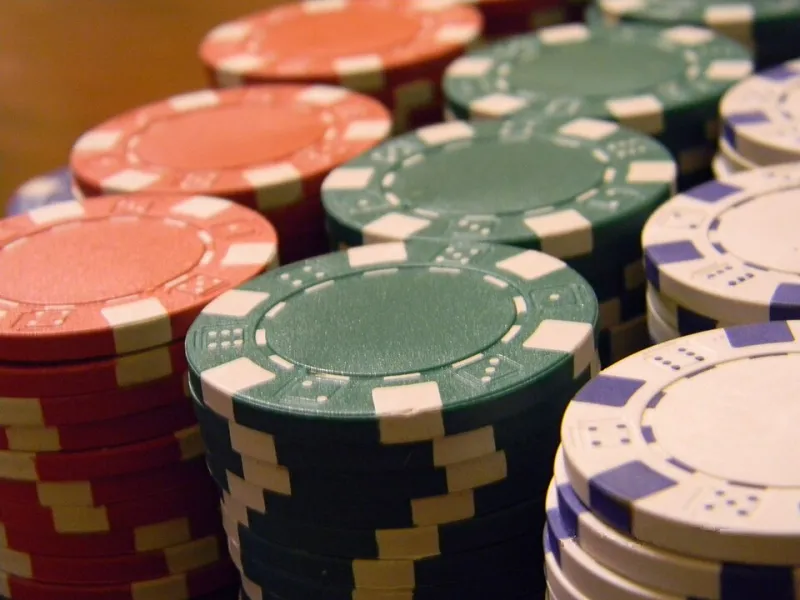
One Number Short: The Near-Miss Trap That Keeps Australia's High-Rollers at the Table
Photo: Unknown, Public domain, via Wikimedia Commons
The reel stops one symbol short. The poker hand misses by a single point. The roulette ball lands next to your number, close enough to make the table groan. Nothing has been won. And yet the brain does not file the moment as a loss. It files it as a draft win — a near-completion that feels like evidence you were almost there.
That feeling is not accidental. It is one of the most studied effects in gambling psychology, and it is especially potent in high-stakes environments. The bigger the bet, the more vivid the near miss. The more vivid the near miss, the harder it is to walk away.
What a near miss does to the brain
A near miss is a loss that looks like a win. In slot machines, the classic example is two matching symbols and a third that lands just off the line. In table games, it might be a hand that falls one point short or a bet that covers most of the numbers but not the one that matters.
Researchers have found that near misses activate reward-related circuitry in the brain, similar to — though not identical to — actual wins. That is the trap. The brain gets a small hit of anticipation and possibility, even though the outcome is negative. Over time, the near miss becomes reinforcing. It keeps the player in the game without paying them.
There is also counterfactual thinking: the mental rehearsal of what almost happened. If only the dealer had drawn differently. If only the ball had bounced left. If only I had pressed the bet. This kind of thinking is normal, but in a casino it is fuel. It turns a loss into a story about proximity, and proximity feels like progress.
Why high stakes turn up the volume
In a low-stakes game, a near miss is annoying. In a high-stakes game, it is an event. The money on the table raises arousal, sharpens attention and makes the miss more memorable. The table reacts. Someone exhales. Someone laughs. The dealer resets. All of it stamps the moment into memory.
High-rollers are also more likely to have a skill-based self-image. They believe they can read the table, manage the odds and make better decisions than the average punter. A near miss fits neatly into that story. It confirms that they were close, that they were reading it right, that the outcome was just a fraction away from validating their judgment.
That is the discipline delusion. A player can keep perfect records and still be fooled by near misses, because the near miss does not look like a loss in the moment. It looks like a signal to continue. The almost win is the perfect fuel for the belief that the next hand is the one.
The language of the almost
Listen to how players talk after a near miss. The vocabulary is revealing. So close. One off. Should have been. I knew it. The table wanted to give it to me. These phrases are not neutral. They are attempts to recode a loss as something else — a moral victory, a bad beat, a sign of impending luck.
In extreme casino culture, near misses become social currency. The story of the hand that almost changed everything is more entertaining than the story of the hand that simply lost. That is fine as entertainment. It is dangerous as decision-making. The player who remembers the almost and forgets the actual is building a false ledger.
Breaking the loop
The first step is to call the near miss what it is: a loss. Not a moral failure, not a bad beat, not a sign from the gambling gods. A loss. The second step is to separate decision quality from outcome. A good decision can produce a loss. A bad decision can produce a win. The near miss does not change that.
High-stakes players need pre-commitment more than anyone. Set session limits before you sit down. Set loss limits and time limits. Use the casino's own tools if they exist. Have an exit ritual that does not depend on how the last hand felt. And keep a ledger that records near misses as losses, not as almosts.
It also helps to have someone outside the table who will ask the boring questions. How much did you bring? How much is left? What time is it? The extreme end of the market is full of people who can afford to lose, which is exactly why they need boundaries. Affordability is not the same as immunity.
The near miss is not fate. It is probability doing what probability does, with a bit of psychological theatre attached. In 2026, the sharpest high-rollers are the ones who can feel the pull of the almost and still read the actual. The table wants you to remember the one that got away. Your ledger should remember the ones that did not.