Ghost Players: The Invisible Tactics Behind Australia's Most Untraceable Casino Operators

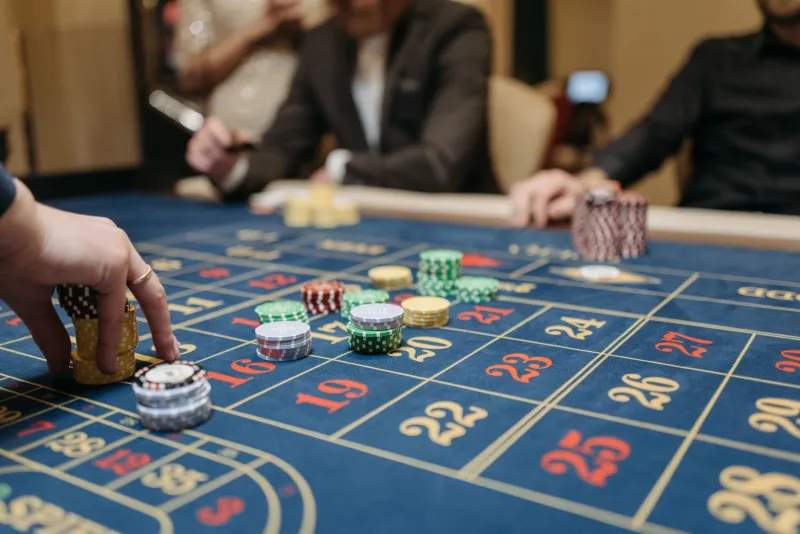
Photo: shadowy figure casino surveillance cameras privacy anonymity, via gocasino.tw
The loudest player in the room is rarely the most dangerous one.
In Australia's high-stakes casino world, the operators who've built genuine, lasting wealth at the tables tend to share one counterintuitive trait: you've almost certainly never heard of them. They don't have social media profiles cataloguing their wins. They don't appear in the background of anyone else's casino selfies. Their names don't circulate in the gossip that moves through VIP lounges like a low current.
They've worked very hard to make sure of it.
This is the world of Australia's ghost players — a loose, largely invisible cohort of elite gamblers who've elevated operational privacy from a personal preference into a sophisticated competitive strategy. And in an era of expanding digital surveillance, facial recognition technology, and increasingly aggressive casino data collection, the methods they use are becoming more elaborate and more impressive by the year.
Why Invisibility Is an Edge
Before getting into the mechanics, it's worth understanding why anonymity matters so much at the extreme end of Australian casino play.
The obvious answer is privacy. High-stakes gambling involves significant sums of money, and drawing attention to those sums creates risk — from opportunistic criminals, from tax scrutiny, from casinos themselves who may choose to limit or exclude players they identify as consistently profitable.
But there's a deeper strategic dimension that goes beyond self-protection. When opponents don't know who you are, they can't study you. They can't identify your patterns, anticipate your tendencies, or develop counter-strategies based on your history. Every session begins from a position of information asymmetry that favours the unknown player.
In poker especially, this is enormously valuable. The player who walks into a room as a complete unknown forces every opponent to make reads from scratch, in real time, with no historical data to draw on. That's an advantage that money alone can't buy.
The Analogue Playbook
Perhaps the most striking aspect of how Australia's most privacy-conscious players operate is how deliberately analogue their approach tends to be.
Cash is king — and not in a clichéd sense. Serious ghost players structure their financial lives to minimise electronic traces wherever possible. This doesn't necessarily mean anything illegal; it means being thoughtful about how money moves, where it sits, and what paper trail it leaves. Prepaid instruments, careful cash management, and a studied avoidance of anything that creates a linkable transaction history are standard practice.
Phones are treated with a suspicion that would seem paranoid in any other context. Some players operate with secondary devices used exclusively for casino-adjacent communication — burner phones in the old-school sense, or encrypted messaging apps that leave minimal metadata. Others simply leave their primary device in the car, recognising that modern smartphones are essentially tracking devices that also make calls.
The reasoning isn't conspiratorial. It's practical. Casino operators in Australia have sophisticated data operations, and the information collected from loyalty programs, card transactions, and venue check-ins builds remarkably detailed profiles of regular players. Ghost players refuse to feed that machine.
Venue Architecture and the Rotation Game
One of the most tactically interesting aspects of how invisible players operate is their approach to venue selection and rotation.
A player who appears regularly at the same casino, at roughly the same times, playing the same games at similar stakes, is a player who's been profiled. The venue knows their patterns. The staff recognises them. Other regulars have taken note. That familiarity, comfortable as it might feel, is a form of vulnerability.
Ghost players treat their venue choices the way a skilled card counter treats their bet sizing — deliberately, variably, and with a constant awareness of the impression being created.
In practical terms, this means moving between venues across different states, mixing high-stakes sessions with lower-profile appearances, and occasionally playing at a level below their actual capability specifically to avoid triggering the kind of attention that exceptional performance attracts. It's a long game, and it requires patience that many players simply don't have.
The geographical flexibility of online casino platforms has added another dimension to this. Australia's most sophisticated operators increasingly blend physical and digital play in ways that distribute their footprint across multiple environments, making any single venue's data far less useful as a predictor of their actual behaviour.
The Identity Question
This is where things get genuinely complex — and where the line between smart strategy and legal risk becomes something that every player in this space needs to understand clearly.
There's a significant difference between managing your public profile — controlling what information about you exists and circulates — and misrepresenting your identity. The former is entirely legitimate and increasingly common among Australia's elite players. The latter is a path that nobody operating sensibly should walk anywhere near.
What legitimate identity management looks like in practice: avoiding unnecessary disclosure, declining to participate in casino loyalty programs that trade privacy for perks, using legal names while providing no additional information beyond what's required, and being strategic about which venues you allow to develop a relationship with you.
Some players take this further by operating through legal structures — companies or trusts — that can receive and hold funds without directly connecting those funds to an individual's name in publicly searchable records. Again, this is legal, common in many high-value industries, and something that any competent accountant or lawyer can advise on properly.
The Psychological Cost of Invisibility
It would be dishonest to present the ghost player lifestyle as purely advantageous. There are real costs, and the most serious ones are psychological.
Operating in deliberate obscurity is isolating. The wins can't be celebrated publicly. The losses can't be commiserated over with a wide circle. The identity that's been carefully protected is also, in some ways, a self that's been carefully suppressed. For players who've been doing this for years, there can be a quiet erosion of the ordinary social pleasures that most people take for granted.
There's also a cognitive load that comes with sustained operational discipline. Remembering what you've told whom, maintaining consistency across different contexts, tracking which venues know what about you — it's a mental overhead that compounds over time.
The players who manage it best tend to have a very clear sense of why they're doing it. Anonymity as a means to a specific end — financial security, competitive advantage, personal privacy — is sustainable. Anonymity as an end in itself starts to feel hollow.
The Long Game
Australia's ghost players aren't hiding because they're afraid. They're invisible because they've understood something that most people in the casino world take years to grasp: the less you're seen, the longer you can play.
In an environment that's increasingly sophisticated about identifying, profiling, and managing its most capable participants, the ability to remain effectively unknown is one of the few genuine edges that's entirely within a player's control.
And in the most extreme casino circles this country has to offer, control is everything.