Cashing Out for Good: The Quiet Exodus of Australia's Elite High-Rollers
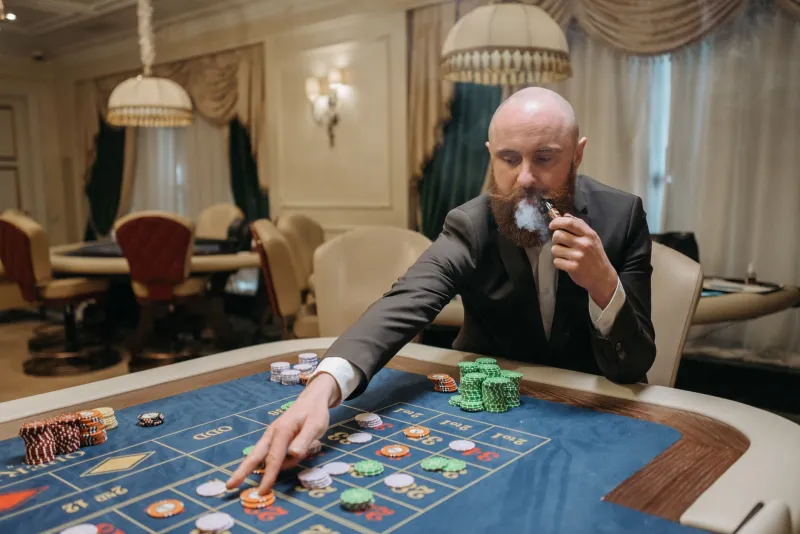
There's a particular kind of silence that follows a big win. Not the roar of the crowd or the clinking of chips — something quieter, more internal. For a growing number of Australia's most formidable high-rollers, that silence has become a full stop rather than a comma. They're stepping back from the tables not because they've lost, but precisely because they haven't.
It sounds almost absurd. Why would someone who has cracked the code — who genuinely understands variance, reads opponents like open books, and has the bankroll to weather almost any storm — choose to walk away? The answer, it turns out, is more layered and more human than most people expect.
The Paradox at the Heart of Extreme Play
High-stakes gambling in Australia has always attracted a particular personality type: sharp, competitive, comfortable with discomfort. These are people who thrive on the edge. The adrenaline isn't a side effect — it's a core feature. But here's where it gets interesting. That same neurological reward system that makes extreme play so compelling is also what makes it unsustainable at the highest levels.
Behavioural researchers have long documented what's sometimes called the "hedonic treadmill" — the tendency for intense experiences to normalise over time, requiring ever-greater stimulation to produce the same emotional hit. For elite gamblers, this means the $50,000 hand that once triggered genuine euphoria eventually starts feeling routine. And when the extraordinary becomes ordinary, something fundamental shifts.
Dr. Melissa Tan, a Sydney-based behavioural psychologist who has worked with high-net-worth individuals navigating lifestyle transitions, puts it plainly: "The people who are truly exceptional at high-stakes gambling often reach a point where the game no longer surprises them. And without surprise, there's no real thrill. They're essentially too good for the experience to give them what they came for."
When the Numbers Stop Adding Up
Beyond the psychology, there's a cold financial logic at play. Australia's most sophisticated gamblers don't just count their wins — they account for everything. Time, energy, opportunity cost, the wear on relationships, the slow erosion of mental bandwidth. When you start factoring all of that in, the return on investment looks very different.
Marcus, a former Melbourne-based poker player who spent the better part of a decade competing in private high-stakes games across Sydney, Brisbane, and internationally, describes the moment of clarity with characteristic bluntness: "I was up significantly on the year. Objectively, everything was working. But I sat down one night and actually mapped out what the game was costing me in real terms — not just money, but everything else. The number I came up with was confronting."
He's not alone. Several former elite players describe a similar reckoning — a moment when the ledger gets honest and the hidden costs become impossible to ignore. For some, it's the relationships that have quietly frayed. For others, it's the realisation that their mental energy, which is their single most valuable asset, is being consumed by an activity that no longer delivers commensurate reward.
The Identity Trap
One of the less-discussed challenges facing elite gamblers who want to step back is the identity question. When you've built a reputation, a social circle, and a self-concept around being someone who plays at the extreme end, walking away isn't just a lifestyle change — it's a kind of identity death.
Australia's high-roller culture is particularly intense in this regard. The VIP rooms, the private games, the unspoken hierarchy — they create a social ecosystem that's genuinely difficult to exit without feeling like you're losing something beyond just the action. Former players describe a period of genuine grief, not for the gambling itself, but for the version of themselves that existed inside that world.
Sophie, a Brisbane-based former high-stakes baccarat player, describes it this way: "I'd been 'the player' for so long that I genuinely didn't know who I was without it. The first few months away from the tables were harder than any bad run I'd ever had at the felt. That surprised me. I thought leaving would feel like relief. Instead it felt like losing."
What followed, she says, was a deliberate process of rebuilding identity around other pursuits — business ventures, travel, physical challenges. The competitive drive didn't disappear; it just needed somewhere new to go.
The Strategic Exit
What distinguishes the gamblers who exit successfully from those who struggle is, unsurprisingly, the same quality that made them exceptional at the tables: strategic thinking. The best exits aren't impulsive. They're planned with the same rigour that elite players bring to their betting decisions.
This often means establishing clear financial benchmarks before stepping away — a number that represents genuine security rather than just comfort. It means building alternative structures for social connection and mental stimulation. And it means being honest about the emotional work required to detach from an identity that has, in many cases, been central for years.
Marcus, who now runs a private investment operation out of Melbourne, is characteristically direct about the transition: "I treated leaving the same way I treated entering a big game. I did my homework. I had a plan. I knew what I was walking into and I knew what success looked like on the other side. The discipline that made me good at gambling is the same discipline that made leaving possible."
What the Exit Reveals About the Game
There's something almost philosophical about the trend. In a culture that celebrates the high-stakes rush — and at a site like Extreme Casino AU, we're unapologetic about loving that rush — the voluntary exit of elite players forces a genuinely interesting question: what is extreme gambling actually for?
For most recreational players, the answer is entertainment, escapism, the joy of competition. For professionals, it's a livelihood. But for the small cohort of truly elite operators who've mastered the game at its highest levels, the answer has often evolved into something harder to articulate — a search for meaning, for mastery, for the kind of aliveness that only genuine risk can produce.
When the game can no longer deliver that, the game has run its course. And the most self-aware players recognise that moment not as defeat, but as graduation.
The Ultimate High-Stakes Call
Perhaps the most extreme thing an elite gambler can do is decide they've won enough. Not just for the session, or the month, or the year — but permanently. It requires a kind of psychological courage that the table itself never demands, because the table always offers another hand.
For Australia's quietly departing high-rollers, the ultimate bet isn't on a card or a number. It's on themselves — on the belief that the skills, discipline, and risk tolerance that made them exceptional at the tables can be redirected toward something that keeps growing rather than something that inevitably plateaus.
That's a wager, it turns out, with genuinely extraordinary odds.