Unmasked at the Table: The Body Language Secrets Australia's Elite Punters Use to Dismantle Their Opponents
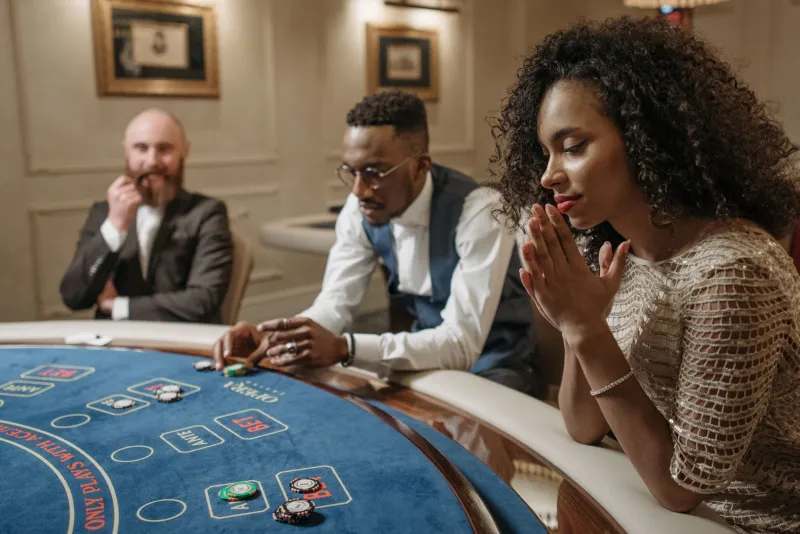
There's a moment that every seasoned Australian high-roller knows intimately. The cards are face down, the pot is bloated, and the room has gone quiet in that particular way that only happens when serious money is on the line. In that silence, the player across the felt isn't just holding a hand — they're broadcasting a signal. The question is whether you're tuned in to receive it.
At the sharpest end of Australian casino culture, reading people isn't a soft skill. It's a weapon. And the punters who've mastered it aren't relying on luck — they're running a real-time psychological analysis every single hand.
The Science Underneath the Poker Face
Most people think a tell is something obvious — a nervous laugh, shaky hands, a player who suddenly sits bolt upright when they hit their card. And sure, those exist. But the elite tier of Australian high-stakes gambling has long since evolved past surface-level reads.
The real action happens in micro-expressions: involuntary facial movements that last between 1/25th and 1/5th of a second. Pioneered in research by psychologist Paul Ekman, these fleeting signals are hardwired into human biology. You can't consciously suppress them, which is exactly what makes them so valuable at a poker table.
Fear, contempt, disgust, surprise — they all register on the face before the conscious mind has had a chance to put up its defences. An elite punter who's trained to spot a micro-flash of fear across an opponent's eyes the moment a dangerous community card hits the board? That's not intuition. That's science with a bankroll attached.
Baseline First, Everything Else Second
Here's where a lot of amateur players go wrong: they watch for tells without ever establishing a baseline. If you don't know how someone normally breathes, talks, or holds their posture, any deviation means nothing.
Australia's most dangerous table players spend the early rounds of a session doing something that looks like nothing — observing. They're cataloguing. How does this person sit when they're comfortable? Do they tap their fingers when they're bored or when they're anxious? Do they make eye contact when they're confident or when they're bluffing?
Once that baseline is locked in, deviations become data points. A player who's been chatty for two hours suddenly going quiet? That's a flag. Someone who's been casually tossing chips into the pot now placing them with deliberate care? Another flag. These aren't tells in isolation — they're tells in context, and context is everything.
The Cluster Principle: One Signal Means Nothing
A single piece of body language is rarely conclusive. A player touching their face might just have an itch. Someone avoiding eye contact might be distracted by a waitress across the room. The professionals know this, which is why they look for clusters — multiple simultaneous signals that point in the same direction.
A hand covering the mouth, a slight forward lean, and a quickened blinking rate all happening at once? That's a cluster worth betting against. Conversely, a relaxed jaw, open posture, and steady breathing from someone who just re-raised you? That's a cluster that might make you reconsider your next move fast.
At Crown Melbourne or The Star in Sydney, where the pots can swing into six figures, this kind of multi-signal reading is what separates the players who consistently walk out ahead from the ones who keep wondering what they're missing.
Verbal Leakage: What They Say vs. What They Mean
Body language doesn't stop at the neck. The voice is one of the most revealing instruments at a poker table, and most players aren't even aware they're using it against themselves.
Pitch elevation under stress is nearly universal — when someone's under pressure, the muscles in the throat tighten, and the voice climbs slightly. Speed changes matter too. A player who suddenly starts talking faster after a raise might be trying to project confidence they don't actually feel. Over-explanation is another classic tell: if someone folds and then spends three minutes justifying why, they're usually managing their own discomfort at the decision.
The flip side is deliberate verbal misdirection — a tactic Australia's most seasoned punters use with surgical precision. A well-timed sigh before a massive raise. Casual conversation about something completely unrelated right before making a move. These are manufactured signals designed to send opponents down the wrong path, and they work because most players are still watching for the obvious stuff.
Eye Contact: The Myth and the Reality
Conventional wisdom says liars avoid eye contact. At a high-stakes table in Australia, that logic will get you cleaned out.
Experienced bluffers know the eye contact myth and use it deliberately. They'll hold your gaze with unsettling steadiness precisely because they know you're looking for them to look away. The real signal isn't the presence or absence of eye contact — it's the quality of it. Is it natural? Does it feel performed? Is there a slight delay before it lands, suggesting it was consciously applied rather than instinctive?
Pupil dilation is harder to fake, though it's also harder to read across a dimly lit casino floor. When it is visible, it's gold — dilated pupils are a genuine physiological response to excitement or stress, and they're not something any amount of poker coaching can suppress.
Psychological Warfare: Playing the Player, Not the Cards
Once you understand what to look for, the next level is using that knowledge offensively. Australia's most ruthless high-stakes players don't just read their opponents — they actively manipulate the environment to generate more readable signals.
Deliberate hesitation before a big call can be used to bait an impatient opponent into a tell. Asking a casual, seemingly irrelevant question at a critical moment forces a cognitive split — the opponent has to manage their response to you while also managing the decision in front of them, and that split-second of divided attention is often when the real information leaks out.
This is psychological warfare, and at the extreme end of Australian casino culture, it's as much a part of the game as knowing pot odds or understanding position.
Training the Eye: It's Not Natural Talent
The most important thing to understand about all of this is that it's a learnable skill. The punters doing this at the highest levels didn't walk into their first poker room already reading micro-expressions. They studied, practised, and built the pattern recognition over hundreds of sessions.
Some have worked with coaches trained in behavioural psychology. Others have spent time reviewing recorded footage of their own sessions, watching themselves get read and figuring out how to tighten up their own leakage. A few have gone as far as formal study in deception detection — the same discipline used by law enforcement and intelligence analysts.
The edge at Australia's most extreme tables isn't always found in a mathematical formula or a betting system. Sometimes it's found in the split second before someone looks away — and knowing exactly what that means.