72 Hours at the Edge: Inside Australia's Most Legendary Casino Endurance Runs
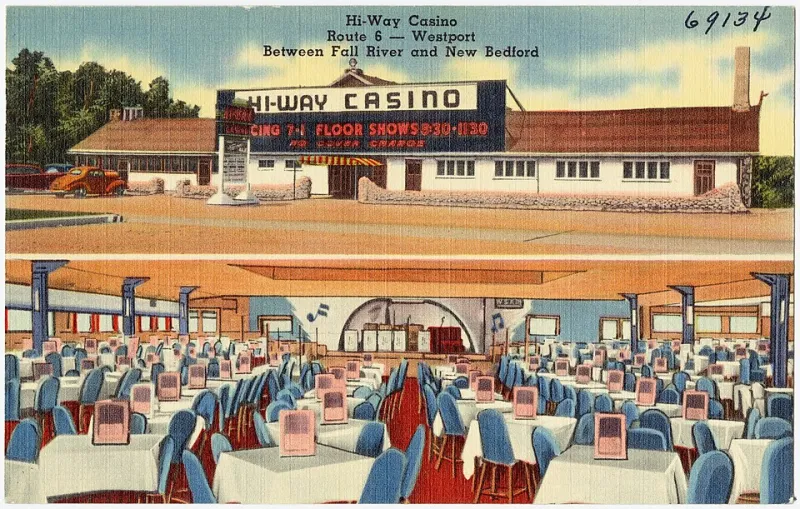
Photo: Pub. by H. K. Skinner, Pearl River, N.Y. Dexter Press Colorcraft Post Cards, Pearl River, N.Y., Public domain, via Wikimedia Commons
Most punters know when to call it a night. The chips are down, the eyes are heavy, and the drive home beckons. But then there are the others — a rare breed of Australian gambler who treats the casino not as an evening's entertainment but as a multi-day arena. These are the marathon players, and their stories are equal parts awe-inspiring and sobering.
We've spent time piecing together some of the most documented extreme betting marathons in Australian casino history — speaking to floor staff, industry insiders, and in some cases the players themselves — to understand what really happens when someone decides to keep going long after everyone else has gone home.
What Drives Someone to Go the Distance?
Before we get into the stories, it's worth asking the obvious question: why? Why would anyone voluntarily sit at a poker table or a baccarat layout for 40, 60, or even 72 consecutive hours?
The answers are as varied as the players themselves. For some, it starts as a hot streak — the cards are running good, the chips are stacking, and stopping feels like leaving money on the table. For others, particularly those chasing losses, the marathon becomes a desperate attempt to turn the session around before facing the outside world. And then there's a third category: the genuine endurance seekers, players for whom the physical and psychological extreme is part of the appeal.
"You get a certain type coming through," one long-serving floor supervisor at a major Melbourne casino told us, speaking on condition of anonymity. "They arrive with a plan. You can tell. They've got energy drinks in their bag, they've slept the day before, and they've got that look in their eyes. It's not reckless — it's calculated. Those are the ones who usually last."
The Preparation Rituals of Australia's Marathon Punters
Contrary to what you might imagine, the most successful extreme session players don't just rock up and wing it. The documented accounts of Australia's longest gambling runs share some surprisingly consistent preparation patterns.
Sleep banking — deliberately sleeping 10-12 hours in the 24 hours before a planned marathon — is common among experienced long-session players. Nutritional preparation matters too. Players who've lasted beyond the 48-hour mark often describe eating a substantial, high-protein meal before sitting down and maintaining steady, small snacks throughout rather than relying on the casino's complimentary buffet spreads.
One former professional poker player from Brisbane, who requested we use only his first name — Darren — described his preparation for a legendary 60-hour session at a Queensland venue in the mid-2010s: "I treated it like running an ultramarathon. You don't just show up and run 100 kilometres. I had my diet sorted, I'd done a light workout the day before, I'd slept well for three nights leading up to it. The mental side was the hardest — I had to decide before I sat down exactly what my exit conditions were."
Darren's session, which multiple witnesses corroborated, ended with a substantial profit after he walked away voluntarily. He was one of the lucky ones.
When the Body Starts Fighting Back
The medical reality of extended gambling sessions is genuinely confronting, and it's something Australian casino operators are increasingly aware of. Sleep deprivation research consistently shows that after 24 hours without sleep, cognitive impairment is comparable to a blood alcohol level of 0.10 — above the legal driving limit. At 48 hours, the deterioration becomes severe, with decision-making, risk assessment, and impulse control all significantly compromised.
Dr. Patricia Holloway, a sleep medicine specialist based in Sydney who has consulted with harm minimisation programs, explained the neurological picture: "The prefrontal cortex — the part of your brain responsible for weighing consequences and making rational decisions — is one of the first areas to degrade under sleep deprivation. For a gambler, that's catastrophic. The very faculties you need to make good decisions are the ones going offline first."
This creates a particularly dangerous feedback loop in marathon gambling scenarios. As fatigue sets in, players lose the ability to accurately assess their own impairment. They feel fine. They're not fine. And the bets keep coming.
Casino staff are trained to watch for specific warning signs: slurred speech, difficulty handling chips, erratic bet sizing, and what floor workers describe as "the thousand-yard stare" — a glazed, disconnected look that signals someone has pushed well past their limits.
The Stories That Define the Extreme
Perhaps the most widely discussed Australian casino marathon in recent memory involved a high-roller at a Sydney venue who reportedly played baccarat for approximately 68 hours in the late 2000s. The details, pieced together from multiple staff accounts and corroborated by gaming industry sources, describe a player who arrived with a substantial bankroll, maintained a composed demeanour through the first 30 hours, and then — as the exhaustion compounded — began making increasingly erratic wagers.
The session reportedly ended not by choice but when casino management, acting under their responsible gambling obligations, intervened and requested the player take a break. The outcome financially was described as "significant losses" by those familiar with the situation.
Contrast that with a documented poker marathon from Melbourne's high-stakes underground circuit in the early 2010s — a 72-hour cash game involving seven players, most of whom rotated in and out while one particular participant, a semi-professional player known in local circles as "The Accountant," reportedly stayed for the entire duration. By accounts from multiple participants, he finished the session in profit, though observers noted he was barely coherent during the final hours.
"He was running on fumes by the end," one participant recalled. "But he'd been so disciplined for the first two days that he'd built up enough of a cushion that even his impaired decisions couldn't burn through it entirely."
The Casino's Perspective: Duty of Care in Extreme Situations
Australian casinos operate under strict responsible gambling frameworks, and marathon sessions present genuine challenges for compliance teams. Major operators are required to monitor for signs of problem gambling behaviour, which extended sessions can indicate — though not always.
The distinction between a high-roller who has genuinely prepared for an extended session and a problem gambler in the grip of a dangerous spiral isn't always obvious from the floor. Staff training increasingly focuses on pattern recognition: is the person eating, taking breaks, maintaining communication? Or are they deteriorating, chasing losses, and refusing all attempts at engagement?
Several Australian casinos have implemented voluntary curfew options and mandatory break systems for players who've been at the tables beyond certain thresholds — quiet interventions that frame the break as a service rather than a removal.
The Verdict on Marathon Gambling
The documented history of Australia's extreme betting marathons tells a story with two very different endings. For the rare, disciplined, well-prepared player who enters with clear exit conditions and enough of a bankroll buffer to survive the inevitable impaired decision-making of the later hours, extended sessions can be survivable — even profitable.
For the majority, the mathematics and the medicine both argue against it. The cognitive toll of sleep deprivation compounds every other risk factor in gambling. Edges erode. Discipline dissolves. And the casino, which never sleeps and never gets tired, sits there waiting.
The most extreme gambling experience isn't always the one that lasts the longest. Sometimes the most audacious move is knowing exactly when to stand up and walk out the door.